Canada’s oldest weekly newspaper
© 2026 The Picton Gazette
Since 1830


 15° Mostly Cloudy
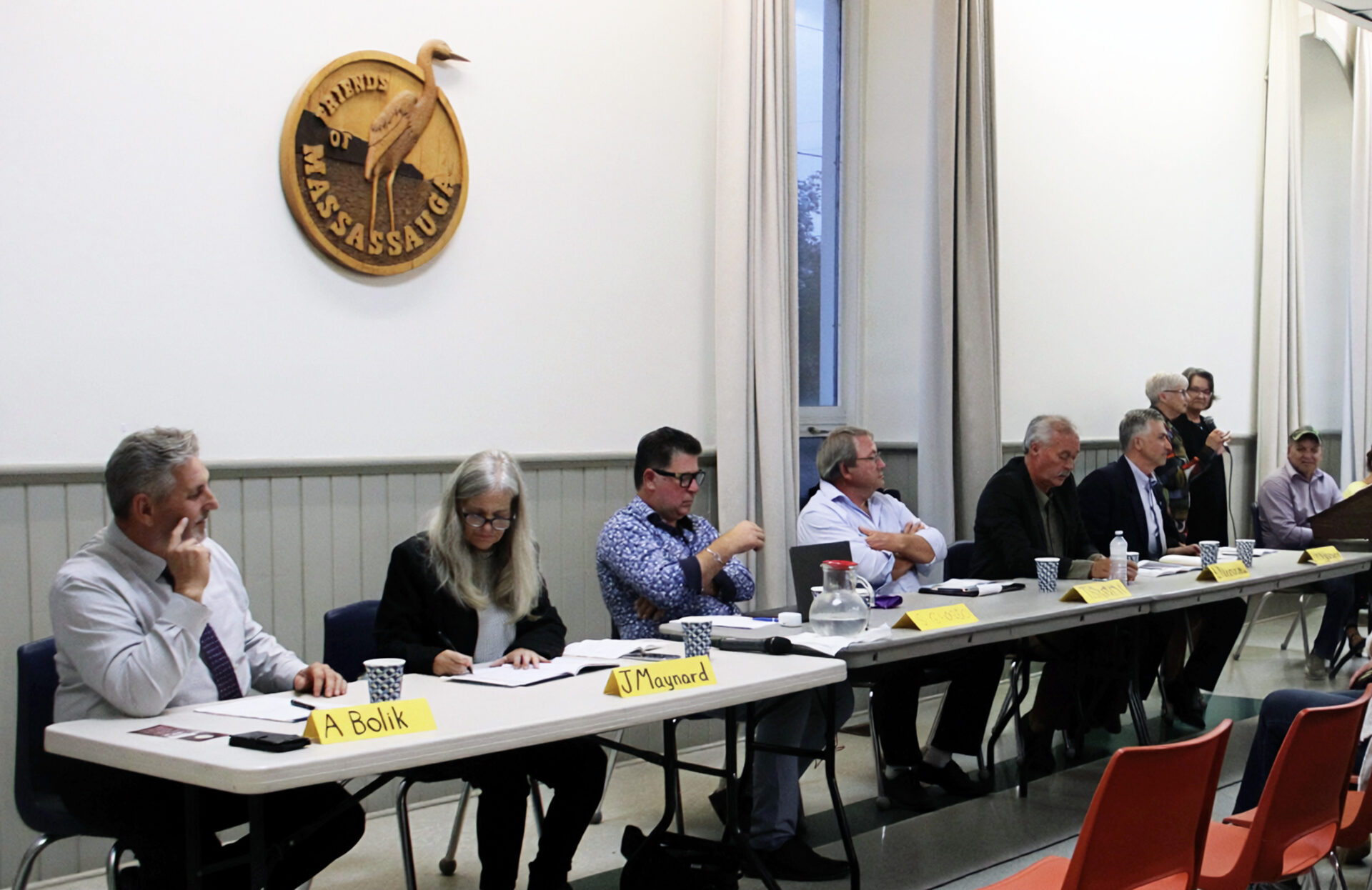 Candidates in Ameliasburgh in the hot seat last week. (Josh Thomas/Gazette Staff)
The residents of Ameliasburgh want to see their tax dollars put to use in Ameliasburgh.
All six candidates for the three ward seats on council, alongside the three mayoral contenders, had their feet held to the fire by residents last Thursday. Ameliasburgh pays 25 per cent of all municipal taxes. Residents made spending those tax dollars in the ward a recurring theme.
Put to all the candidates was the statement, “Ameliasburgh is the largest area in terms of taxes, and we don’t receive the same level of services.” The sentiment was delivered in multiple ways over the course of the evening.
Candidates across the board agreed, however, that while they will work to address concerns where they can, keeping tax dollars in Ameliasburgh is not really an option and hasn’t been since the County amalgamated nearly 30 years ago.
Candidates did note areas where the ward could be better represented.
“I have heard repeatedly here in the north we don’t get the same level of service. They have roads, street lights, they have PEFAC. There are services we just don’t get. We get emergency and police services, but we pay 25 per cent of taxes. I want to see where you the residents want the tax dollars we do get, to go,” said Dianne O’Brien.
Andreas Bolik said he would make clear at Shire Hall that the County is “a community of communities,” not just Picton and Wellington.
“Very often we’re treated as a place to drive through to get to the 401. I don’t mean we should get the lion’s share, but we have four of the six water treatment plants in the County. We need to make sure everyone knows we’re important and we’re part of the family,” Mr. Bolik said.
Another question concerned responsible allocation of the operating budget.
Paul Boyd stated this is the most important election in 26 years due to the level of debt the County is carrying, and Council must be aggressive in reducing costs and cutting waste. Ms. O’Brien said there are plenty of ways the County can look at reducing waste, noting a reduction in County staff was an option.
“We’re $100 million in debt, we have to stop the spending,” she said.
Doug Villeneuve echoed the statement. “What we need to do as a council is look at the people we employ at the top end from the CAO down. How many people do we have running a department. Can we collaborate? Can we have one supervisor look after 10 instead of 3? I believe that’s what everybody in this room wants, we want the waste gone,” he said.
Councillor Sam Grosso said the County needs to reduce red tape, hire fewer consultants, and see projects through to their completion. “Sometimes when we’re stuck, council will send it back to staff for a report, and that costs money and manpower. We should probably stop doing that and start making decisions instead of sitting on the fence,” Mr. Grosso said.
The next question suggested reducing costs isn’t always the way to go. A resident asked sitting councillors Grosso and Maynard about the 8-6 vote against continuing a legal battle with Picton Terminals. Both councillors said that after a closed session discussion, it was clear the County could not in good faith approve getting into a legal battle it expected to lose.
“Picton Terminals is governed by provincial and federal governments. There isn’t much more we can do. We can get bylaw officers over there. I know a lot of people are not fans of them, but they are here to stay. Their legal bills are a small line on their statement at the end of the year. We can inspect as much as we can but it is a David versus Goliath fight,” Mr. Grosso said. On the destruction of the escarpment, he noted, “The MNR is doing an investigation, we’re going to let them do the investigation and hopefully they make the right choice.”
Maynard echoed the sentiment stating she knew they would lose, and she could not spend hundreds of thousands of dollars on legal bills to fight the illegal quarrying.
For Mr. Bolik, it is not as much about making decisions as it is prioritizing which decisions to make.
“We have to look at the things we must do, the things we should do, and then if there’s anything left over we can do the nice things. Everybody comes to council with a good idea fairy on their shoulder. We can’t be all things to all people so we really need to prioritize.”
He added the County has 88 buildings, many surplus, and it needs to either use them, or get rid of them.
On taxes, candidates were asked if people in the County are being conditioned to accept 4 to 6 per cent tax increases every year. This question was directed to the mayoral candidates. All three agreed tax increases have been too high.
Terry Shortt said he will run a budget with a 4 per cent increase, while Brad Nieman said it is possible to operate with only a 2 per cent budget increase. Ernie Margetson noted a 9 per cent increase in taxes between 2022 and 2026. He agreed with Bolik, saying the County needs to cut discretionary costs.
The three mayoral candidates stuck to their main campaign points. They did answer personal questions, such as if any of them own short term rental properties. None do. Shortt owns a rental property which has been occupied for 25 years and which is up for sale. All three also stated they would not use strong mayor powers.
Councillor candidate Paul Boyd said there needs to be a long look at the amount councillors and staff earn, saying there are too many County employees making over $100,000 a year. Mr. Boyd also stated the money councillors take home is too high, though he was off on his projections. He claimed councillors would take home over $175,000 in a term, multiplying $45,000 per year over four years.
Mr. Grosso took exception. “Mr. Boyd, with all due respect. you need to get your numbers right. Councillors take home $40,446. If you want younger people on Council, if you want single mothers, more professional people on Council, you have to pay them properly.”
Slowing down drivers on rural roads was another issue. Many residents noted this is a County-wide issue. Solutions, however, were not very practical. Mr. Boyd said speed bumps were a non-starter. “There are speed bumps there now.” Ms. Maynard said electronic signs work. And Doug Villeneuve said it comes down to policing.
“Why don’t we just put a police officer there? Signage, yes, but, to me, enforcement is the easiest solution.”.
See it in the newspaper