Canada’s oldest weekly newspaper
© 2026 The Picton Gazette
Since 1830


 7° Mainly Clear
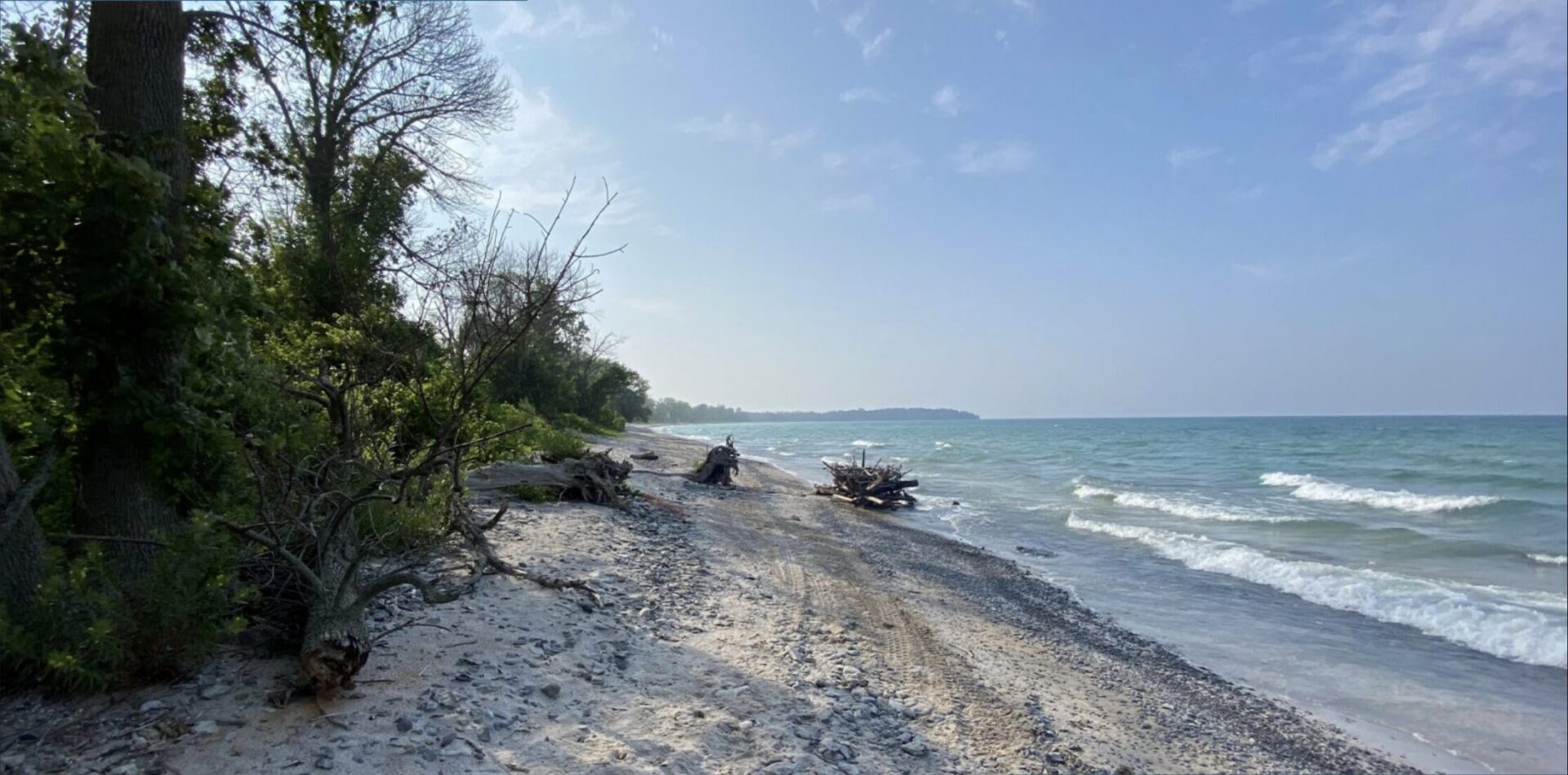 Prince Edward County’s shoreline is highlighted in the newly adopted Climate Action Plan. (Supplied image)
Seven years after the County declared a climate emergency, it has its first Climate Action Plan.
Years of research, public consultation and collaboration informs the plan, which is aimed at reducing greenhouse gas emissions while preparing the municipality for a changing climate.
Council approved the plan at the July 23 Committee of the Whole following a presentation from Environmental Services and Sustainability Supervisor Albert Paschkowiak, who described years of consultation with residents, businesses, the agricultural community, municipal staff, and local volunteers.
“It’s been a long journey,” he said. Councillor John Hirsch described the Plan as “a masterwork.”
“This has been years in the making, of you guiding members of our staff, the various working groups, and so on,” he said. “It’s really been an amazing effort.”
The plan establishes a long-term framework for reducing greenhouse gas emissions. Organized around seven priority areas, it identifies more than one hundred actions to be taken by both the municipality and residents. The document is intended to guide future policy, planning and investment.
The adoption builds on work presented to Council earlier this year, when the County’s first comprehensive greenhouse gas inventory established a baseline for community emissions. It identified transportation and buildings as the municipality’s largest sources of greenhouse gases.
Together, the inventory and the Climate Action Plan establish a framework for measuring progress while identifying priorities for reducing emissions and improving climate resilience.
“It’s not a final product,” Paschkowiak said. “This is a draft plan that lays out the activities that we could undertake to achieve what we’re looking to do, which is reduce our greenhouse gas emissions.”
The plan is a “living document.” Projects will return to Council individually through the annual budget process. A climate risk and vulnerability assessment will set priorites, while external grant funding could reduce the financial impact on taxpayers.
Discussion focused on implementation and the growing urgency of climate adaptation.
Councillor Chris Braney pointed to the County’s increasingly erratic weather. “We go from biblical proportion rain to biblical proportion drought,” he said. Representing a largely agricultural ward, Mr. Braney said protecting water resources and food security should remain a priority as the municipality prepares future budgets.
Mr. Paschkowiak said staff were already preparing budget requests. He expects to recommend increasing the municipality’s climate reserve, while acknowledging implementation will need to remain cost-conscious.
Funding was a recurring theme.
“We really should be looking at a surcharge from our MAT share because there’s a lot of extra greenhouse gas being expelled in this community,” Councillor Janice Maynard said, suggesting dedicated funding sources should be explored as implementation begins.
Before adopting the plan, Council amended the recommendation from “endorse” to “adopt” to satisfy the requirements of the Federation of Canadian Municipalities’ Partners for Climate Protection program.
Council adopted the Climate Action Plan 9-1, with Councillor David Harrison casting the lone dissenting vote.
See it in the newspaper