Canada’s oldest weekly newspaper
© 2026 The Picton Gazette
Since 1830


 19° Partly Cloudy
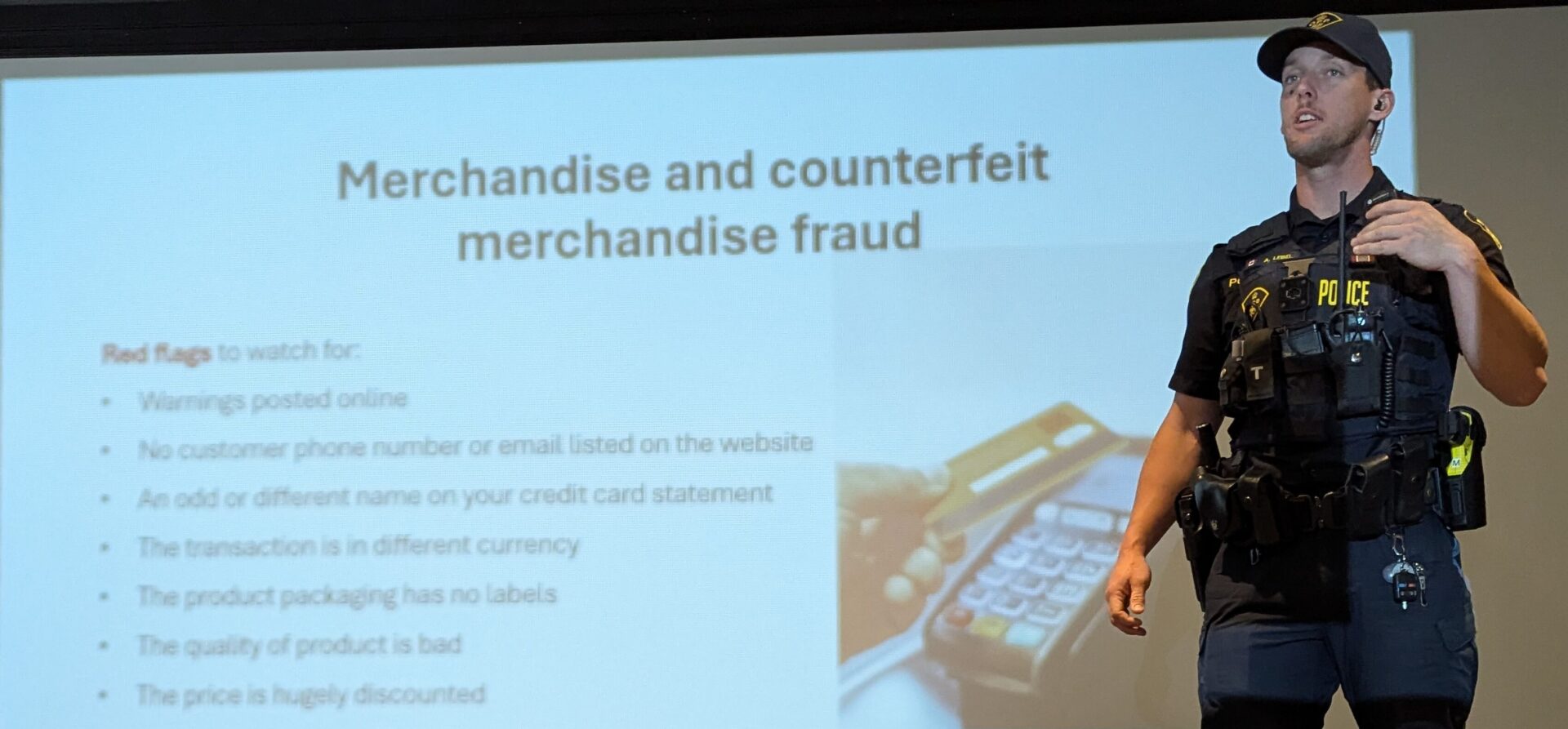 Constable Alex Lebel, OPP Community Engagement and Media Officer (Chris Fanning / Gazette Staff)
The local OPP can’t warn seniors about fraud too often. But it’s not only seniors who are at risk.
Speaking to members of Picton’s MLP Retirement Residence, “fraudsters are professionals,” noted Constable Alex Lebel, the detachment’s Community Engagement and Media Officer. “And they tend to target those who are alone, in particular the elderly.”
Across Canada in 2024 there were nearly 50,000 reports of fraud involving some 35,000 victims. A total of $637 million was stolen.
And that is only what was reported.
“Remember, this is not Toronto, Vancouver or even Belleville,” he stressed. “The big cities have it worse for fraud. It’s still safe to go to the store.” Nevertheless, the County does have its share. The average fraud case in PEC involved $6000 last year, and nearly $11,000 in 2024. The respective highs in single cases were $120,000 and $306,000.
More alarming is the fact that only about 5-10 percent of such thefts are reported. Constable Lebel related his own experience of falling for a Facebook Marketplace scam. He sent $100 to someone who gave him a fake address and then disappeared.
He confessed that he was ashamed to report the incident.
“Fraud is always going to be there,” he said. The best way to protect ourselves is to share information with each other. This could be an experience of fraud, or, better yet, asking someone—a family member, a friend or neighbour—about any transaction you’re worried about before doing it.
“Take your time,” said the Constable. Pressure to move quickly is one of the key techniques of a fraudster. “Slow down, seek a second opinion. Don’t respond to strangers.”
Almost all fraud these days is computer-powered and AI driven. That little pause when you answer the phone is one telltale sign that you are just one of millions of people receiving a call. The callers are fishing to see if you’ll click through to an actual person, who will then start with emotional manipulation, preying on fears about an unpaid tax bill, or a parking ticket.
Or suddenly a loved one needs to be bailed out of jail.
“The Canadian Criminal Justice System never offers bail for cash or cryptocurrency or gift cards,” the Constable stressed. “Never.”
In general, Constable Lebel noted, “if it’s too good to be true, it probably is. Think twice.” Steep discounts on merchandise or high returns on investments are suspicious.
Limit your profile information on social media and check your privacy settings. He recalled one case in which a fraudster was able to reconstruct five generations of a victim’s family tree from their social media accounts. This provided the criminal with all kinds of convincing details to manipulate the victim, and to guess at passwords.
Don’t download anything or click on links in unsolicited communications.
Throughout, he stressed paying attention to the little details. Does that email telling you your credit card is overdrawn spell the name of the card correctly? Do the company logo or colours match? If you’re worried there might be something wrong, it is always best to hang up and call the company directly.
Check for signs of Artificial Intelligence fakes: count the fingers in a photograph or video!
Pay attention to your bank and credit card statements. If something has happened, call your financial institution immediately. They can watch for and stop suspicious activity.
Contact the authorities; the non-emergency line is 1-888-310-1122. Reporting fraud or suspicious activities is sharing important information. Watch out for yourself and those who are vulnerable in your circle.
See it in the newspaper