Canada’s oldest weekly newspaper
© 2026 The Picton Gazette
Since 1830


 11° Sunny
On November 11, the Wellington United Church, decorated in military regalia and packed to the brim with residents, offers a stark reminder of what so many lost their lives to protect.
In one row, veterans of different conflicts, laden with medals of valour for their contribution, sit and reflect on the sacrifices they’ve made. The solemnity of their faces suggests memories of their own lost friends and loved ones. They fought, not because they wanted to, but so that everyone else could live their lives as they see fit.
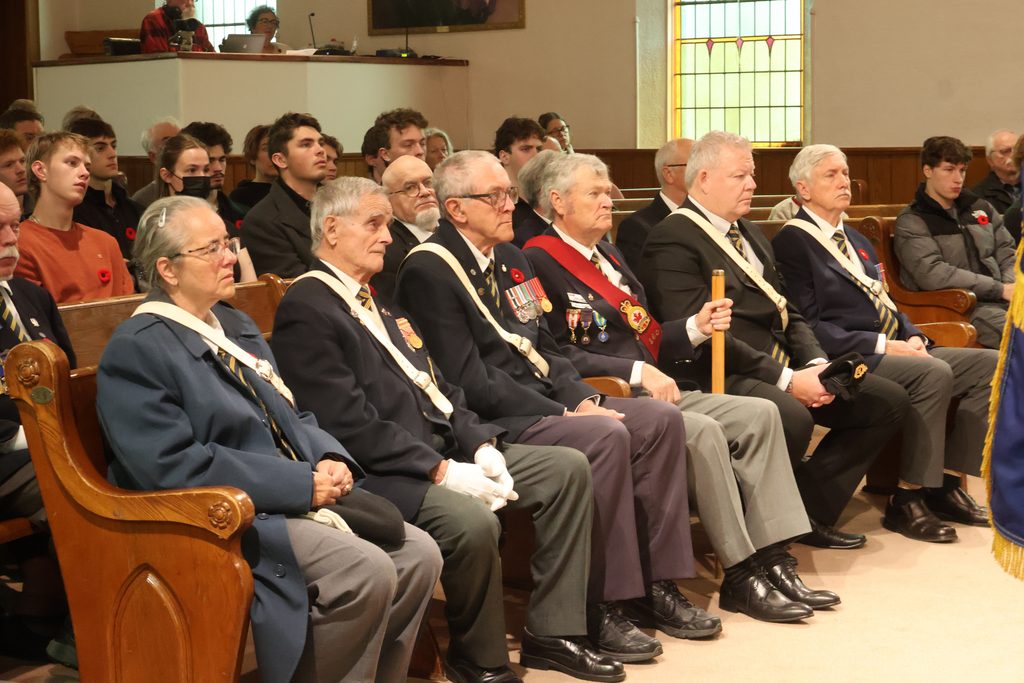
One row back sits the Wellington Dukes hockey club. To their left, everyday members of the community whose days are spent providing any number of services. Bakers, mechanics, business owners, and churchgoers.
For much of the year, it is easy to get caught up in daily routines, to forget the lives given to ensure the peace and prosperity of a thriving community. Crossing the threshold in Wellington puts it all back into perspective.
“On Remembrance Day, we give thanks for those who have made sacrifices in pursuit of justice. We honour the sacrifices made in pursuit of peace, nurses, ambulance drivers, doctors, and chaplains. We affirm sacrifices made in pursuit of freedom, and we lament that these sacrifices were necessary. We renew our calling to strive for peace, justice, freedom and truth,” said Minister Doug Carter.
Rev’d Carter shared a prayer with those in attendance before leading the choir through two hymns. Rev’d Aaron Miechkota and Rev. Canon Fran Langlois then led readings of scripture.
“We give you (God) thanks for the freedoms and security we enjoy, mindful of the heavy price paid by so many to secure them,” Ms. Langlois said.
With 11 o’clock and a moment of silence approaching, Rev’d Miechkota recited “In Flanders Fields,” by Colonel John McRae.
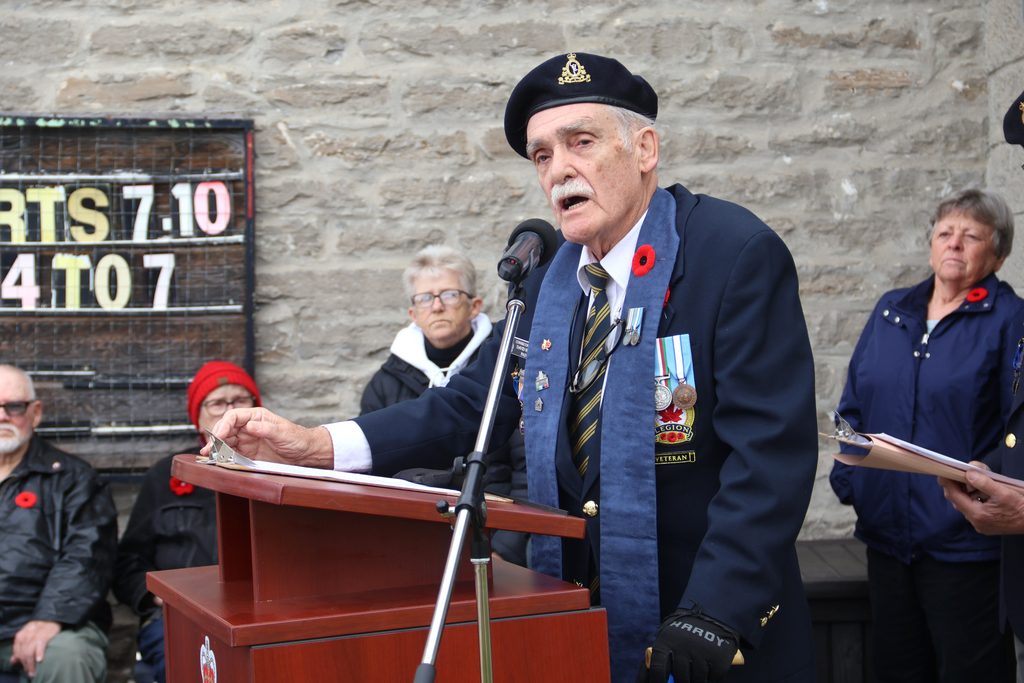
In Consecon, meanwhile, Padre David Holmes went a step further, providing detail on the horrors McRae would have gone through before he sat down to pen his now famous poem. Mr. McRae was 41 years old when Canada was thrust into the First World War. He had the option of joining the medical corps because of his training and age, but he volunteered instead to join a fighting unit as a gunner and medical officer.
That was McRae’s second tour of duty in the Canadian military; he had previously fought with a volunteer force in the Second Boer War.
Residents gathered for Remembrance Day proceedings outside of the Consecon Branch of the Royal Canadian Legion to hear the remarks.
“After providing aid to those injured in the Second Battle of Ypres, McRae sat on the back of a wartime ambulance and put pencil to paper,” Mr. Holmes said before reading the poem to the Consecon crowd.
Then came the time to lay wreaths at the Cenotaph. One by one, distinguished members of the community and representatives of fallen veterans alike lined up to place the wreaths and pay their respects.
It may not seem like much, a few seconds of reflection, but it says thank you. So, when all of the 30+ wreaths had been laid, the crowd did not dissipate. Instead, residents formed a lengthy line, ensuring they did not leave before they paid their own respects. Some laid down poppies, while others stood in silent reflection. Few left without getting their chance.
Back in Wellington, as in Picton, like-minded rituals unfolded simultaneously.
“Whether this sanctuary is a place you come every Sunday, or whether you step through these doors today from another faith tradition, or simply as a neighbour standing shoulder to shoulder in civic memory, you are warmly welcomed. We all gather here today under the quiet weight of Remembrance,” Rev’d Carter said.
It took soldiers who fought in the Great War 12 days to cross the Atlantic to get to a war which would dominate their lives for four years, three months, and 14 days. More than 66,000
Canadians didn’t make it back.
A couple of decades later, another six years of fighting took another 45,000 of our own. In those two conflicts alone, more than 100,000 Canadians left their loved ones for the last time, without any understanding of the impact they would eventually have.
“When we bow our heads, our primary instinct is to look back. To oceans, fields in Europe, and to dusty roads where young men and women gave up their tomorrow so we might have our todays. To honour that sacrifice is a sacred duty. We promise, every year, we will remember them,” Rev’d Carter said. “There is a powerful way we can remember, not just by looking back on what has happened, but a remembering we are able to integrate into our lives and goals as communities.”
Now, back to the hustle and bustle of every day life, we have, hopefully, the inclination to take a little more time out of our lives to remember and reflect on what makes it all possible.
For coverage of Picton events, see At the Cenotaph.
See it in the newspaper