Canada’s oldest weekly newspaper
© 2026 The Picton Gazette
Since 1830


 24° Mostly Cloudy
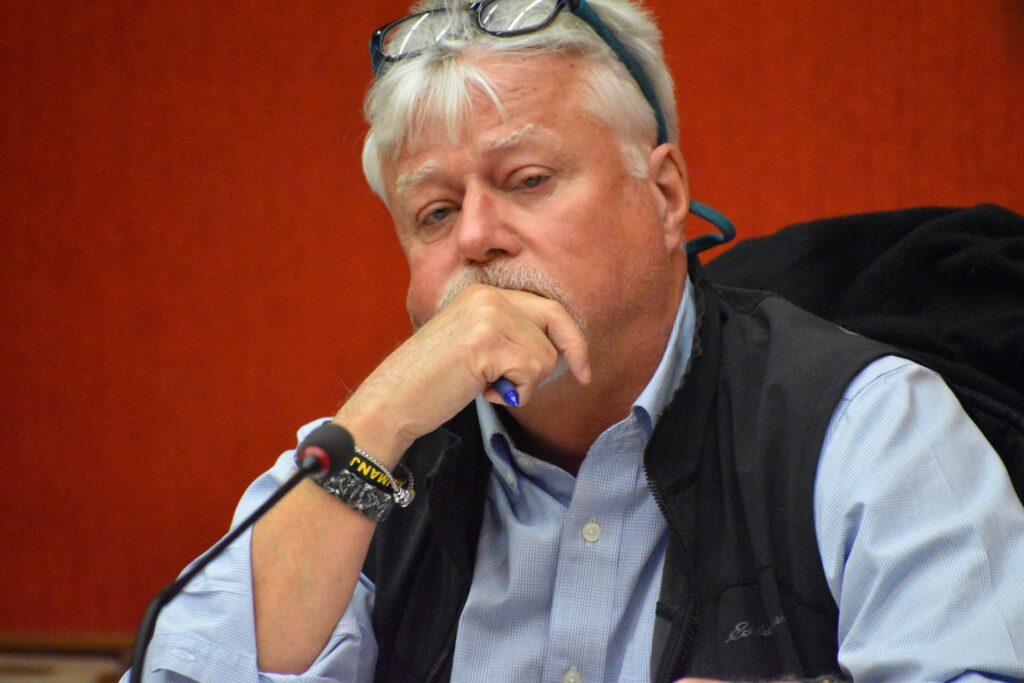 Sophiasburgh Councillor and Board of Health member Bill Roberts (Jason Parks/Gazette Staff)
Picton, along with a handful of other communities in southeastern Ontario, is in danger of losing its Public Health office.
Southeastern Public Health (SEPH), an amalgam of regional health units from Quinte to Leeds & Grenville, announced in November it would cancel leases for offices within proximity —50 km or less — to offices in Belleville, Kingston, Brockville, and Smiths Falls as of March 1, 2026. Picton was on the list.
Three public health inspectors are assigned to the local satellite office, one on contract. Programming includes sexual and oral health services.
Late last month, SEPH Medical Officer of Health and CEO Dr. Piotr Oglaza said that after critically assessing the best way to serve the southeast region as a unified agency, the organization would merge teams across the region.
But at a follow-up Board of Health meeting in Kingston, a reprieve came. County Councillor and Board of Health Member Bill Roberts successfully called for a pause on the proposed closures.
“I was pleased that the majority of my SEPH board colleagues agreed taking a sober moment was important for this new merged public healthcare unit,” Mr. Roberts told the Gazette. “Clearly, we’ve heard from the public and from stakeholders that the process was likely wanting … and importantly SEPH must continue to build trust and perhaps now mend a few fences.”
In addition to Picton, Public Health offices in Almonte, Gananoque, Kemptville, Napanee, Perth, Cloyne, and Trenton were to be shuttered.
“The merger has given us time and funding to truly look at how we were delivering programs and services as legacy agencies, and to find new and innovative ways to provide programs and services together, as SEPH,” Dr. Oglaza said originally.
After the amlagamation, comprehensive assessments of SEPH office locations, service usage, and occupancy costs were undertaken. Those findings were balanced against community needs, evolution of service delivery models, and workforce preservation.
The assessment indicated several leased office locations were underutilized, and cost savings could be reinvested back into the agency to fund more effective ways of offering programs and services.
“This approach will protect core public health programs and services while enhancing the long-term sustainability of our agency,” he said.
“I want to assure you that we remain fully committed to the health and well-being of our rural communities,” said Dr. Oglaza. “The decision to close these offices was aimed at optimizing operations while continuing to serve the community’s needs.”
Uncertainty over how public health services will roll out has raised eyebrows of local leaders. Mr. Roberts worries about relying on partnerships when health funding is already stretched too thin. “Efficiency is not always the same as effectiveness,” said Mr. Roberts. “In my view, any downloading of SEPH onto primary care and our PEC Family Health Team would be neither responsible nor sustainable. Both are already stretched and underfunded by the province, and play critical but distinct healthcare roles.”
The board meets Wednesday in Kingston and will either vote for Mr. Roberts’s pause motion or proceed with closures.
The Executive Director of the Prince Edward County Family Health Team speaks out.
Public health plays a critical role in the well-being of rural communities — a role that is distinct from, yet tightly interwoven with, primary care. Our teams rely deeply on strong public health partnerships for immunizations, outbreak management, communicable disease follow-up, family and youth supports, harm reduction, sexual health and health promotion. These services form the backbone of prevention and early intervention, helping to keep people well and reducing pressures on hospitals, primary care, and emergency services. The absence or alteration of these rural programs and services will have profound impacts on the well-being of our community.
In a rural community like Prince Edward County, the stakes are even higher. Geography, transportation limitations, and socioeconomic disparities already create barriers for many residents. The presence of local public health services helps close those gaps. Without them, residents must travel farther, delays increase, and vulnerabilities compound — particularly for families without vehicles, seniors, newcomers, and those navigating complex challenges.
We are following this closely, and we are hoping that we can get more clarity from public health in the not-so-distant future
See it in the newspaper