Canada’s oldest weekly newspaper
© 2026 The Picton Gazette
Since 1830


 19° Mainly Sunny
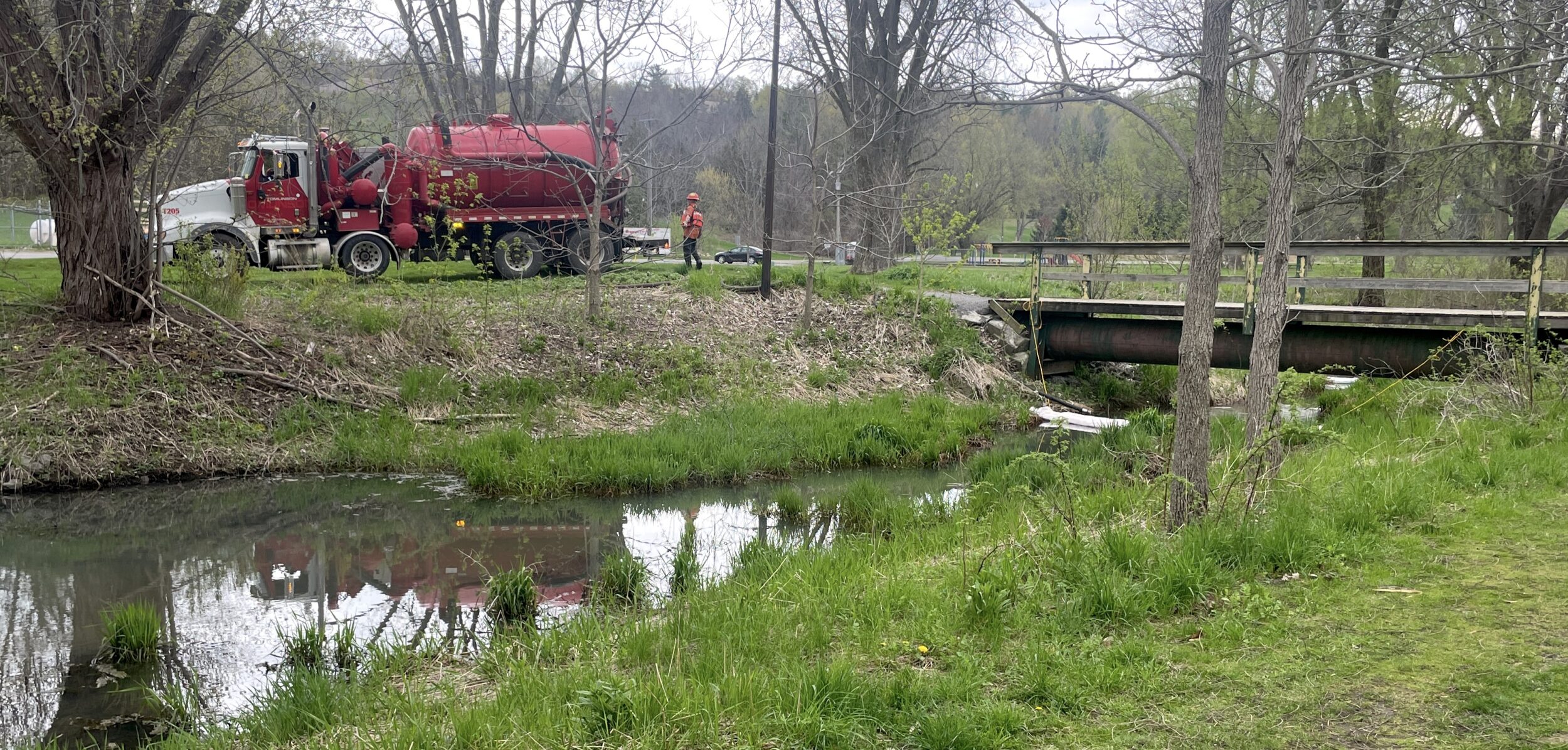 A Tomlinson Group vacuum truck was deployed to Delhi Park on the afternoon of May 5 to siphon free phase petroleum that had entered Marsh Creek by way of Picton’s storm sewer system. (Jason Parks/Gazette Staff)
Picton’s century-old drinking water plant at Chimney Point is better equipped to deal with threats to its treatment system than it was in 2017, the last time it was shut down by a spill.
But a diesel fuel dump May 5 at the intersection of Main and Bowery streets only underpins the plant’s fragility — and magnifies the 300 or so risks to the intake zone, where Picton and Bloomfield source their drinking water.
Despite determining where the fuel entered Picton’s storm sewer system and eventually flowed into the mouth of Marsh Creek—where it created a threat to the water intake a few hundred metres from the shore near the Picton Golf and Country Club—the municipality and the Ministry of Environment, Conservation and Parks are still trying to determine exactly how much fuel was spilled.
And who did it.
“At this point, the amount of material spilled is unknown and estimates vary widely,” County spokesperson Mark Kerr said.
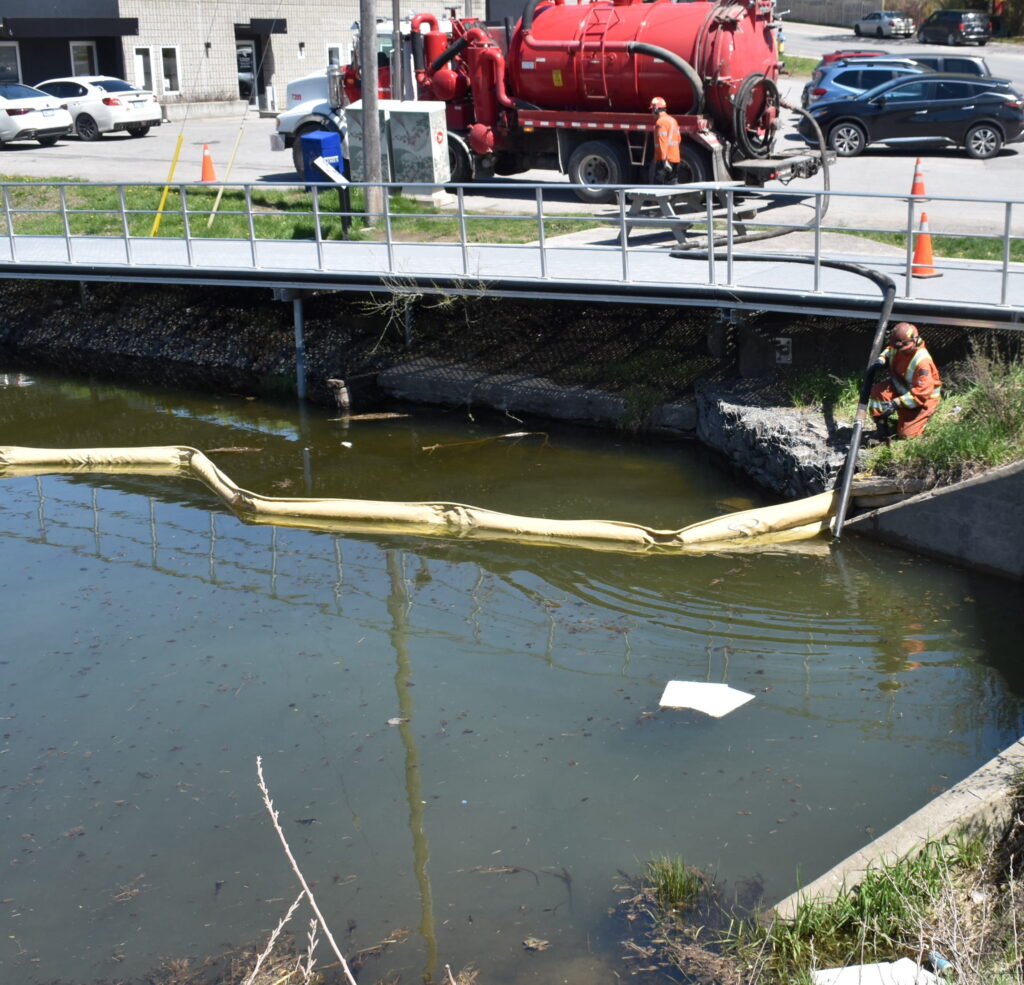
The amount of free-phase petroleum was visible through discolouration, the sheen on the water, and a strong smell of petrochemicals the morning of the spill. Municipal staff immediately deployed adsorbent booms in multiple locations along Marsh Creek and in Picton Bay to prevent contaminants from reaching the water plant.
The fuel entered Picton’s storm sewer system and flowed into the mouth of Marsh Creek—where it created a threat to the water intake a few hundred metres from the shore near the Picton Golf and Country Club.
The municipality and MECP are still trying to determine exactly how much fuel was spilled.
Mr. Kerr said as soon as staff were alerted to the spill in Marsh Creek, the raw water intake was isolated for further investigation on the size and affected area of contamination. The Spills Action Centre, MECP, and Ministry of Health arrived on site soon after.
Monitoring continued throughout the day. At no time was any contaminant observed near the water treatment plant or its intake zone. On the evening of May 5, staff ended the isolation of the raw water intake and the water plant resumed normal service. MECP deemed the spill contained on May 7, and mitigation strategies remained in place for another six days.
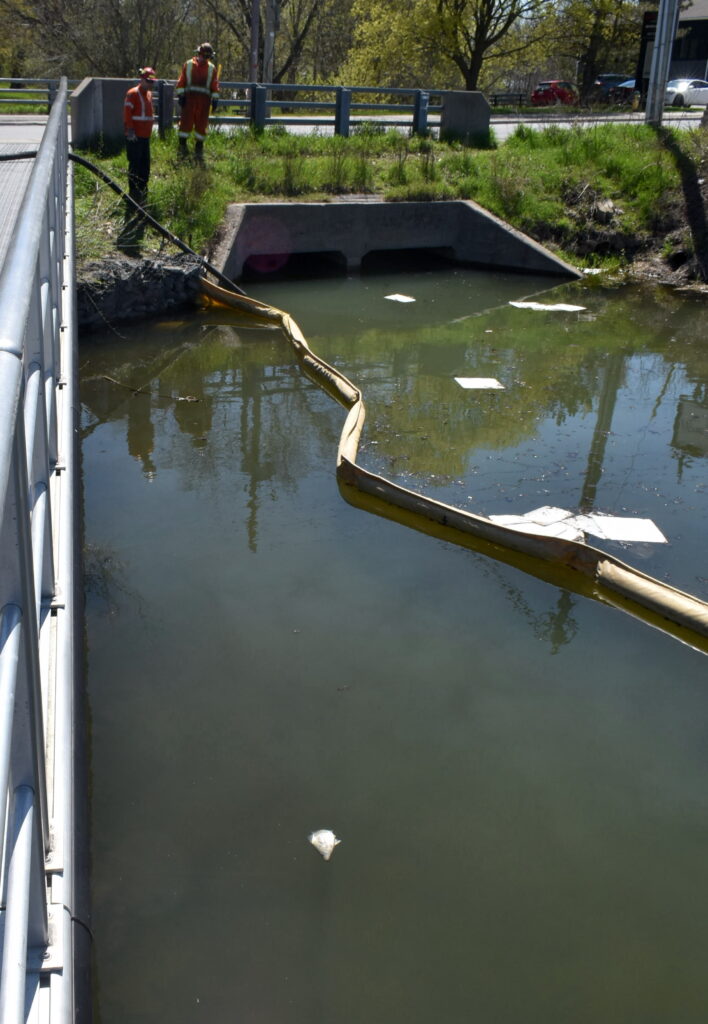
Vacuum trucks and work crews from Tomlinson’s Environmental Spill and Clean Up division worked for over a week, siphoning off polluted top water. So far, there’s no estimate of cleanup costs.
“Cost recovery from the responsible parties will be explored after MECP completes its investigation,” said Mr. Kerr.
No matter the cost, the municipality just dodged the second disaster in less than a decade for the drinking water in Picton Bay.
On March 23, 2017, the Pitts Carillon, a 27-metre steel deck barge owned by Galcon Marine, sank while anchored at Picton Terminals, pouring 50 litres of diesel fuel and hydraulic oil into Picton Bay. The Chimney Point filtration system was immediately shut down. Picton and Bloomfield endured a boil water advisory until April 11. Water was trucked in from neighbouring municipalities and the Wellington water plant to feed the system.
That disaster cost $600,000. The County eventually accepted an offer of $395,000 from the Oil Pollution Fund (SOPF) to help recover its losses. The rest was on us.

Since then, the Picton plant has been equipped with Granular Activated Carbon media with improved adsorption qualities should hydrocarbons enter the plant through the raw water intake. However, Mr. Kerr stresses that hydrocarbon removal depends on the concentration, the flow rate, and where the GAC filters are in their life cycle.
“The absorption rate diminishes over time; they filters are typically replaced every four years under normal circumstances,” said Mr. Kerr, adding there would still be a shutdown if the intake was threatened by hydrocarbons.
“It would not be the municipality’s practice to run the water treatment plant if any hydrocarbons were detected in the raw water entering the facility.”
Any risk to municipal drinking water quality is a serious concern. Earlier this year, Council directed a review of the condition of the County’s water and wastewater treatment facilities.
These reviews, which are nearly complete, focus on the physical assets and process condition, not external factors such as risks within the intake protection zone.
“However, when staff return to Council with the results, any accompanying recommendations will have been developed on the basis of both qualitative and quantitative data, taking into account any risks,” Mr. Kerr stressed.
Residents who suspect pollution in local streams, ponds or water courses on municipal property are encouraged to contact Shire Hall Customer Service at 613-476-2148 to report any spills and are urged to give the area a wide berth to avoid any risks to health and safety.
You may also report pollution online or by telephone. If the incident is urgent, a toll-free, public reporting hotline is available 24 hours a day, seven days a week at 1-866-663-8477
See it in the newspaper